

Global Vitamin E Market Trends: Demand, Supply Chain & Manufacturing Innovations
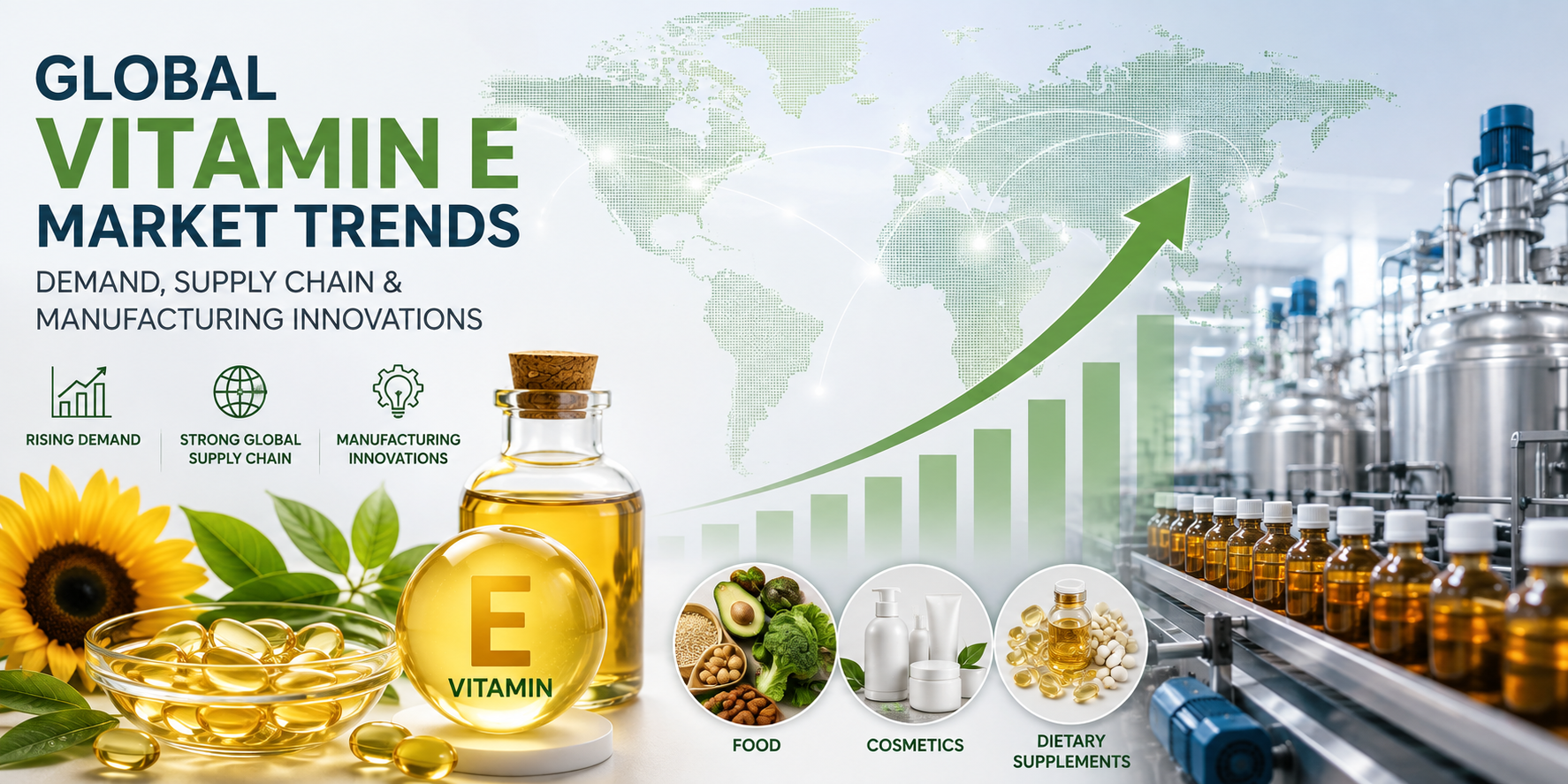
The global vitamin E market is rapidly evolving, driven by rising consumer awareness of its nutritional value. In modern times, vitamin E is widely used in dietary supplements, functional foods, pharmaceuticals, and animal nutrition.
More and more global manufacturers are investing in sustainable production methods and high-quality natural Vitamin E solutions to meet evolving industry requirements.
Why Is Global Demand for Vitamin E Increasing?
Vitamin E is gaining global popularity due to more and more consumers and manufacturers recognizing its antioxidant properties and broad health applications.
Here are some common factors that contribute Vitamin E's market expansion:
- Growing use of dietary supplements
- Rising demand for functional foods
- Growth of the cosmetics and personal care industry
- Increasing pharmaceutical applications
- Higher consumption of premium animal nutrition products
A sudden shift towards healthcare has encouraged modern consumers to add antioxidant-rich nutrients in their daily diets.
Which Industries Drive the Highest Demand for Vitamin E?
The most common industries that contribute to the global Vitamin E market include:
- Dietary Supplements
- Food & Beverage
- Cosmetics & Personal Care
- Pharmaceuticals
- Animal Nutrition
Why Is Natural Vitamin E Becoming More Popular Than Synthetic Alternatives?
The prime reason for the growing popularity of Vitamin E is that many manufacturers and consumers prefer naturally sourced ingredients that align with clean-label expectations.
It is a rich source of naturally occurring tocopherols, widely used for food, nutraceutical, and cosmetic applications. With more and more consumers preferring products with transparency, brands increasingly seek naturally derived ingredients from reliable manufacturers.
How Are Supply Chain Challenges Affecting the Vitamin E Industry?
The most common effects of global supply chain challenges are noticed on Vitamin E's availability, pricing, and production planning.
Some of the major challenges include:
- Fluctuating raw material availability
- Transportation disruptions
- Rising logistics costs
- Geopolitical uncertainties
- Increased quality assurance requirements
Global manufacturers diversify sourcing strategies while improving inventory management and establishing stronger partnerships with dependable raw material suppliers to maintain a resilient supply chain.
What Manufacturing Innovations Are Transforming Vitamin E Production?
Improving technologies, sustainable raw materials, and efficiency throughout Vitamin E production are some of the common innovations that contribute to its transformation.
Some of the key innovations include:
- Advanced purification technologies ensure high-purity Vitamin E ingredients
- Automated production systems for enhanced process control and improved manufacturing efficiency.
- Sustainable production practices adopted by manufacturers to reduce waste, optimize energy consumption, and improve resource utilization.
- Enhanced quality control that ensures product consistency and purity.
How Is Sustainability Influencing the Global Vitamin E Market?
Sustainability becomes a major purchasing factor across the ingredient industry, with more customers preferring suppliers that demonstrate:
- Responsible sourcing
- Efficient manufacturing
- Reduced environmental impact
- Product traceability
- Regulatory compliance
- Consistent quality standards
Global ingredient manufacturers that invest in sustainable operations are better positioned in several industries, including food, pharmaceutical, and cosmetics.
What Role Does Quality Assurance Play in Vitamin E Manufacturing?
Quality assurance plays a vital role because Vitamin E ingredients are used in several products with strict consistency and regulatory compliance requirements. Global manufacturers ensure quality management systems that include:
- Raw material testing
- Process monitoring
- Batch traceability
- Stability evaluation
- Finished product testing
- Documentation and regulatory support
Quality maintenance allows manufacturers to build long-term relationships with customers operating in regulated industries.
How Are Global Regulations Influencing Vitamin E Production?
Vitamin E manufacturers are required to comply with varying regulatory requirements depending on the target market. The reason to this is that international customers often expect compliance with recognized manufacturing and quality standards.
With proper documentation, manufacturers can better serve customers across multiple regions while meeting local compliance requirements.
Frequently Asked Questions
What is driving the growth of the global Vitamin E market?
The key factor for the growth of Vitamin E is more manufacturers adding this ingredient to their products and the rising consumer interest in preventive health and natural products.
What is the difference between natural and synthetic Vitamin E?
Natural Vitamin E is obtained from natural sources, while synthetic Vitamin E is produced through chemical synthesis.
Which industries use Vitamin E the most?
The common industries using Vitamin E include dietary supplements, functional foods, pharmaceuticals, cosmetics, personal care products, and animal nutrition manufacturers.
Why is supply chain resilience important in the Vitamin E industry?
Supply chain resilience is a way to maintain consistent product availability, reduce delays, and ensure uninterrupted customer supply.
How are manufacturing innovations improving Vitamin E production?
Modern innovations such as automation, enhanced quality control, and advanced purification technologies help improve efficiency, consistency, and product quality.
Why choose a trusted Vitamin E manufacturer?
Choosing trusted and experienced manufacturers means investing in consistent quality, regulatory compliance, technical expertise, and scalable production capabilities that help businesses maintain product excellence.